

How to read and understand your CPAP data: Score, Pressure, Leaks, and Usage Hours
La boîte turquoise

Modern CPAP machines are no longer just for delivering pressurized air overnight. Many models also allow you to track certain treatment data using a mobile app or digital portal.
For people living with sleep apnea, this information can be very useful. It helps them better understand their treatment progress, identify discomforts, and know when to seek advice.
But be aware: CPAP data should never replace the advice of a healthcare professional. Its main purpose is to help you monitor your therapy daily.
In this article, we'll help you understand the data displayed by apps compatible with several devices sold at CPAP-Experts, including:
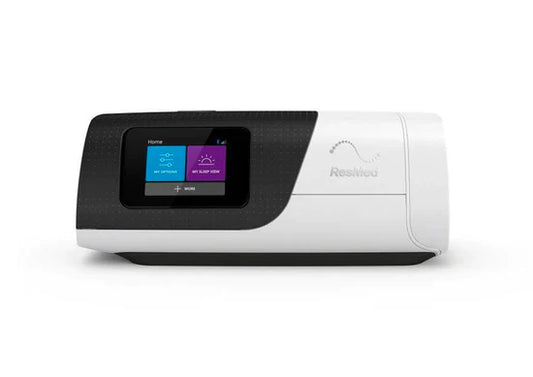
🟩 ResMed AirSense 10
🟩 ResMed AirSense 11
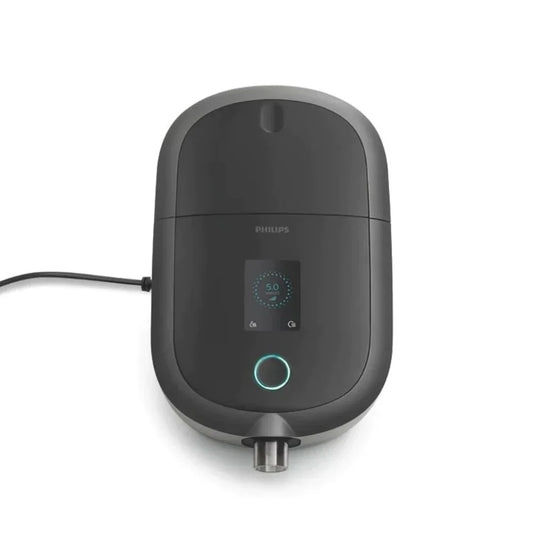
🟩 Philips Respironics DreamStation 2
🟩 Transcend Micro Auto CPAP Travel
🟩 ResMed AirMini
🟩 Breas Z2 Auto

What CPAP apps are compatible with devices sold at CPAP-Experts?
Each brand uses its own app or tracking platform.
ResMed AirSense 10 and AirSense 11: myAir app
ResMed AirSense 10 and AirSense 11 devices can be used with the ResMed myAir app, depending on the model's connectivity and service availability in your region.
myAir typically tracks:
✅ usage duration
✅ mask seal
✅ respiratory events per hour
✅ mask removals during the night
✅ an overall therapy score
The goal is simple: to give you a quick overview of your night and help you stay motivated with your treatment.
ResMed AirMini: AirMini app
The ResMed AirMini is a compact travel CPAP device that works with the ResMed AirMini app.
This app allows you to:
✅ connect the device via Bluetooth
✅ start or manage certain comfort settings
✅ track therapy data
✅ view recent history
✅ better understand device usage on the go
⚠️ Important: The AirMini app is designed exclusively for the AirMini. It does not replace myAir for AirSense devices.
Philips Respironics DreamStation 2: DreamMapper app
The DreamStation 2 works with DreamMapper, Philips Respironics' tracking app.
DreamMapper displays data related to:
✅ AHI
✅ usage
✅ mask fit
✅ treatment goals
✅ reminders and educational information
It's a useful app for tracking your progress, especially if you want to better understand the consistency of your treatment.
Transcend Micro: MySleepDash app
The Transcend Micro Auto Travel CPAP is compatible with MySleepDash.
This app allows you to track:
✅ usage hours
✅ pressure data
✅ leaks
✅ certain therapy summaries
✅ compliance reports to share with a professional
It's particularly useful for people who travel often and want to keep an eye on their treatment even away from home.
Breas Z2 Auto: Nitelog app
The Breas Z2 Auto uses the Nitelog app.
Nitelog generally allows you to:
✅ synchronize Z2 Auto data
✅ analyze certain sleep data
✅ generate compliance reports
✅ share data with a healthcare professional
It's a convenient app for users of a Z2 Auto travel CPAP.
What does the CPAP score mean in an app like myAir or MySleepDash?
The CPAP score is a simplified way to summarize your night.
⚠️ It is not a medical diagnosis.
It's more of an overall indicator based on different elements of your treatment.
Depending on the app and manufacturer, the score may take into account factors such as:
🟩 the number of hours of use
🟩 air leaks
🟩 respiratory events per hour
🟩 how often the mask was removed
🟩 consistency of use
A good score can be encouraging, but you shouldn't rely solely on it. A person can have a good score yet still feel tired upon waking. Conversely, a less-than-perfect night doesn't automatically mean your treatment isn't working or that you didn't sleep well.
The most important thing is to track trends over several nights.

What do CPAP usage hours mean?
Usage hours indicate how long you used your device during the night. This is one of the most important pieces of data, as CPAP therapy only works when the device is worn consistently.
If you only use your CPAP for part of the night, or occasionally, your symptoms may persist, including:
⚠️ fatigue upon waking
⚠️ daytime sleepiness
⚠️ morning headaches
⚠️ difficulty concentrating
⚠️ unrestorative sleep

How many hours should you use your CPAP per night?
You should follow your healthcare professional's recommendations. Generally, the longer the device is used during sleep, the more likely the treatment is to be effective.
If you often remove your mask after a few hours, it's not a failure. It's more of a signal to analyze.
Possible causes include:
⚠️ uncomfortable mask
⚠️ dry mouth or nose
⚠️ pressure perceived as too high
⚠️ air leaks
⚠️ nasal congestion
⚠️ anxiety related to wearing the mask
In many cases, a simple mask change, the addition of a humidifier, an adapted tubing, or comfort accessories can improve the experience.
What does AHI or events per hour mean on a CPAP device?
AHI stands for "Apnea-Hypopnea Index."
It represents the average number of respiratory events detected per hour during your sleep. An event can be a complete or partial breathing pause, depending on the criteria used by the device.
On CPAP apps, you may find:
🟩 events per hour
🟩 AHI or apnea-hypopnea index
🟩 respiratory events
🟩 apneas and hypopneas
Does a low AHI mean my treatment is working?
A low AHI is generally a good sign, but it should be interpreted with caution.
For adults, an AHI below 5 is often considered a favorable target or normal range. However, your personal situation may vary depending on your diagnosis, symptoms, health status, and your professional's recommendations.
You should not adjust your pressure yourself simply because your AHI seems too high or too low. If your events remain high for several consecutive nights, or if you are still very tired despite using your CPAP, it is best to seek advice.
Why does my AHI vary from night to night?
It is normal for AHI to vary.
Several factors can influence respiratory events:
🟧 sleeping position
🟧 nasal congestion
🟧 alcohol consumption
🟧 significant fatigue
🟧 sedative medications
🟧 sleeping on your back
🟧 mask leaks
🟧 CPAP usage duration
A single bad night does not necessarily mean your treatment is ineffective. It is better to observe the trend over several days or weeks.
What do CPAP mask leaks mean?
Leaks indicate that air is escaping from the mask during the night.
A certain level of leakage may be normal depending on the type of mask, but significant leaks can compromise comfort and treatment effectiveness.
Why are CPAP leaks important?
Significant leaks can cause:
🟧 disturbing noise
🟧 air in the eyes
🟧 nasal or oral dryness
🟧 frequent awakenings
🟧 reduced treatment effectiveness
🟧 lower CPAP score
In some cases, the device may have more difficulty maintaining the prescribed pressure if leaks are too significant.
💡Read about this: Errors that Reduce the Lifespan of Your CPAP Mask
💡Also: How to know if my CPAP mask is too old or needs to be replaced?
What does CPAP pressure mean in the app data?
Pressure corresponds to the level of air sent by the device to keep the airways open during sleep.
On an APAP or Auto CPAP device, the pressure may vary during the night according to the needs detected by the device. On a fixed-pressure CPAP, it generally remains stable according to the prescription.
Applications can display:
🟩 average pressure
🟩 maximum pressure
🟩 pressure used during the night
🟩 therapeutic pressure
🟩 pressure range
Can I adjust my CPAP pressure myself?
⚠️ No, you should not adjust your pressure settings yourself without professional recommendation.
Pressure that is too low may not adequately control respiratory events. Pressure that is too high can cause discomfort, leaks, aerophagia, or other side effects.
If you notice consistently high pressure, persistent fatigue, or frequent events, it is best to consult a professional or seek help from the CPAP-Experts team to better understand the next steps.
What does "mask on/off" or mask removal during the night mean?
Some applications may indicate that the mask was removed during the night.
This data is useful because it can reveal a comfort issue. If this happens often, you should look for the cause rather than simply forcing yourself to tolerate the discomfort. The success of your treatment depends on your comfort with the device.
Accessories can help, such as:
🟩 heated humidifier
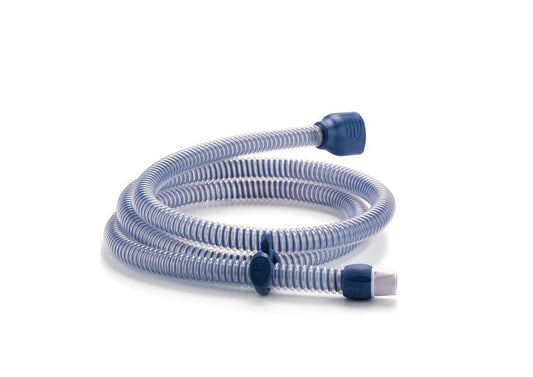
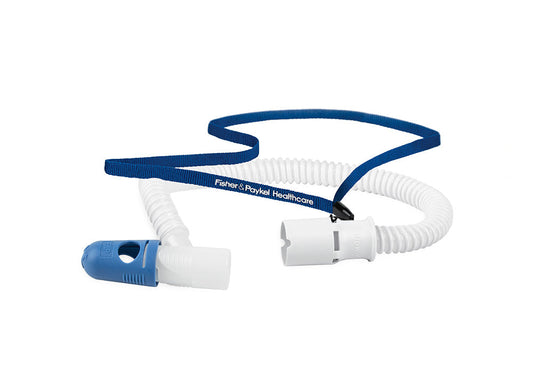
🟩 heated tubing
🟩 lighter mask
🟩 chinstrap
🟩 CPAP pillow
🟩 tubing holder
🟩 comfort pads
How to use your CPAP data to improve your treatment?
CPAP data becomes useful when it helps identify a trend.
Here's how to use it intelligently:
1. Look at trends, not just one night
A bad night can happen.
Instead, observe an average over a few days, then a trend over a month. Note if changes occur after a mask change, a cold, or a trip. Also observe the variation in leaks over time.

2. Compare your data to your symptoms
Numbers don't tell the whole story.
Also ask yourself:
🟧 Do I wake up more rested?
🟧 Do I remove my mask?
🟧 Do I have a dry mouth?
🟧 Does my partner still notice breathing pauses?
🟧 Am I still drowsy during the day?
Good monitoring combines app data and the patient's subjective experience.
3. Identify easy-to-fix problems
Some data directly points to a possible solution.
For example:
⚠️ high leaks: check mask, cushion, or fit
⚠️ low hours: improve comfort or evening routine
⚠️ dry mouth: review humidification or mouth breathing
⚠️ mask removed: look for a problem with pressure, heat, or discomfort
⚠️ persistent high AHI: seek advice from a professional
When should you ask for help to interpret your CPAP data?
It is best to seek advice if:
⚠️ your AHI remains high for several consecutive nights
⚠️ you are still very tired despite regular use
⚠️ leaks are frequent
⚠️ you often remove your mask
⚠️ you have significant discomfort
⚠️ you have difficulty tolerating the pressure
⚠️ you don't know which application to use with your device
CPAP data can provide clues, but it should be interpreted with caution and does not replace the advice of a healthcare or sleep professional.

Need help understanding your CPAP data better?
At CPAP-Experts, we offer devices, masks, and accessories designed to make your treatment more comfortable and easier to follow.
Whatever model you use, our team can help you find the right products for your needs.
Better treatment often begins with better-suited equipment.